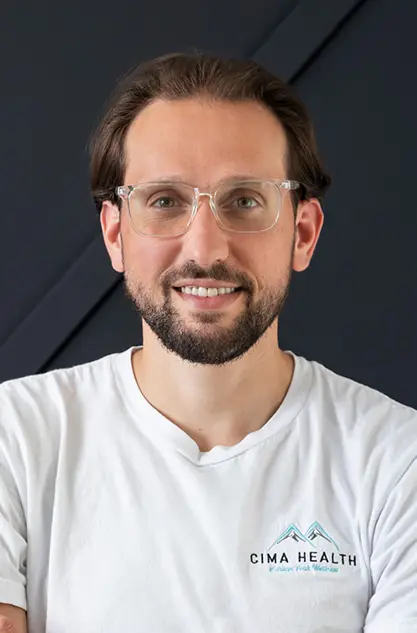
Julian Cimadamore CNP, NAEM, CANNP, IFMC

Julian is a Certified Nutritional Practitioner (CNP) and founder of Cima Health, a functional and terrain-based nutrition practice specializing in chronic complex conditions. He holds a Bachelor’s Degree in Financial Economics from Western University and graduated from the Institute of Holistic Nutrition with First Class Honours. Julian has completed advanced training in gut health, functional blood chemistry, and chronic illness case analysis, with a clinical focus on stealth infections, biofilms, mold-related illness, and persistent inflammatory conditions. His work is deeply informed by his own health journey. In his early 20s while playing varsity hockey at Western and previously competing in the Ontario Hockey League with the Ottawa 67’s and Kitchener Rangers. Julian developed complex, unexplained symptoms that were later identified as Lyme disease and mold-related illness. Navigating that experience reshaped his understanding of chronic disease and ultimately led him into holistic and functional medicine. Today, through Cima Health, Julian helps clients uncover hidden drivers of illness and address root causes using a strategic, phased, terrain-first approach. Julian teaches Nutritional Symptomatology Part 1 at The Institute of Holistic Nutrition.

  • NS 003 Nutritional Symptomatology Part I

    Nutritional Symptomatology Part 1 introduces students to the foundations of clinical nutrition by interpreting physiological symptoms and their relationships to nutritional deficiencies, excesses and toxicities. This course introduces the interrelationships of nutrients and the critical role they play in determining optimal health. Students will develop foundational, as well as condition specific, protocols to restore the body’s balance. This course trains students to understand how physiological symptoms reflect and determine an individual’s nutritional status. Concepts taught include the essential principles of biochemical individuality through i.e. genetics, environment, microbiome, to see each client, and themselves, as truly unique. Students are taught to produce, and are evaluated on, the completion of clinical case study sets. Learning Outcomes: • Gain insight into physiological symptoms associated with nutrient deficiency • Develop professional food, supplement, lifestyle and detox protocols as they relate to specific clinical symptoms • Learn detailed explanations of underlying causes of disease and their relationship to food from a cellular to systems perspective • Understand how to develop comprehensive strategies with a focus on natural remedies for resolving common and complex issues Nutritional Symptomatology Part 1 explores the process of holding consultations using a variety of practitioner-level assessment tools to move clients towards favourable outcomes. Students learn the critical role that biochemical individuality plays in determining results-based personalized nutrition.