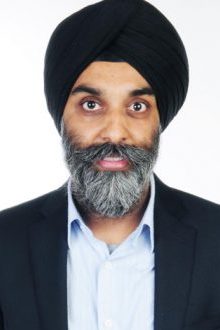
Baljinder Chhoker BSc., CST, BT

Baljinder Chhoker BSc., CST, BT

Baljinder Chhoker has been an educator and consultant in the natural health industry for over 26 years. He graduated from the University of Waterloo with a Bachelor of Science degree in Hons. Science and the Canadian College of Naturopathic Medicine (CCNM) with a Doctor of Naturopathic Medicine diploma.

For the last 13+ years, Baljinder has been the National Educator and consultant for Bio Lonreco / Dr. Reckeweg. He does in-office and online trainings educating practitioners, naturopaths and retailers on various homeopathic and nutraceutical products, as well as recommended protocols for practicing clinicians. He has also provided consulting services for several pharmaceutical and natural health retailers for many years.

He has a vast knowledge of all the natural supplements on the market today. For over 10 years Baljinder has taught at The Institute of Holistic Nutrition, including the course Human Anatomy & Physiology and currently shares his expertise in his Continuing Education Course Supplementation in Clinical Practice (CESCP).

He believes that even though food and lifestyle are the best way to maintain health, the use of supplements is required to help people who have serious health concerns, to get them in a state that allows for the proper food and lifestyle to take over. Baljinder teaches about various modalities (nutraceuticals, homeopathics, gemmotherapy, essential oils, etc.), so practitioners have the correct tools to help their patients to get to their optimal health. As an educator, Baljinder uses his knowledge to “Inspire Practitioners to Heal People”.

  • HAP 01 Human Anatomy and Physiology

    Human Anatomy & Physiology begins with the structure and function of the cell and continues with the organization of the human body from the submicroscopic to the macroscopic. It begins with the incredible arrangement of chemicals and cells to form tissues, organs, and organ systems. To address chronic diseases and conditions, credible practitioners are required to be knowledgeable in the identification and processes of body systems. Specific topics covered will be transport methods, the lymphatic system, the gastrointestinal tract, the endocrine system, and the reproductive system. The symbiosis of physiology will be explored with a focus on integrative and homeostatic control mechanisms. Concepts are foundational in becoming scientifically literate when reading and assessing health information. Students are taught and evaluated on anatomical systems such as: skeletal, muscular, nervous, endocrine, cardiovascular, respiratory, digestive, urinary, and reproductive. Learning Outcomes: • Ability to detail the composition and function of the cell and its organelles • Confidence to identify and explain the four types of body tissues • Explain the components of body systems and their structure, control, and characteristics • Describe the significance of homeostasis in application to nutrition sciences through the management of the nervous and endocrine systems. • Understand blood composition and hemostasis Human Anatomy & Physiology elucidates the organizational composition of body systems through an in-depth analysis of the mechanisms of biological pathways. Thorough knowledge of anatomy and physiology establishes the authority of practitioners to prepare protocols that specifically address organic equilibrium.